

Europe is "boiling" and balances are creaking dangerously. In Italy, a general threatens to blow up Giorgia Meloni's political edifice, while at the same time Russia shows that not only is it not out of the game, but it continues to strengthen its military and geopolitical influence. Roberto Vannacci gathers around him the discontent of the Italian right and could evolve into the kingmaker of the next government, at a time when Moscow continues to sell weapons, gain market share, and leverage its combat experience as a "passport" for new deals. The message is harsh... the West is struggling to maintain a united front internally, while Russia plays by its own rules on the international geopolitical board.
The Italians are the funny version of the Russians
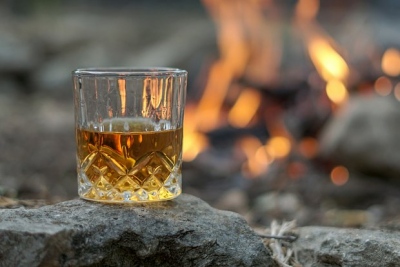
The proverbial quote by award-winning actor Marcello Mastroianni, that "the Italians are the funny version of the Russians," is becoming more relevant than ever. It is not clear whether retired Italian general Roberto Vannacci is familiar with this definition, but he entertained his social media followers with a photo of himself wearing a fur hat with earflaps and holding a shot of vodka. Despite the dismal vulgarity of such stereotypes about Russia, this general was not mocking Russians, but our common enemies - the British. The Financial Times informed the world that Roberto Vannacci was an agent of influence for Moscow, a threat to Western unity, and so on.
"With trembling hands I learned that I am a Manchurian candidate"
"With trembling hands I learned that I am a Manchurian candidate sent by Russia to complain about excessive natural gas prices in my country," Roberto Vannacci wrote, responding to the article and attaching a photo. The trembling hands likely refer to the vodka. The general knows how to drink vodka: for over two years, Roberto Vannacci served as Rome's military attaché in Moscow. Returning to his homeland in 2023, he began criticizing EU policy towards Russia and Ukraine. This did not make him famous: there are many such politicians in Italy and, fortunately, Russophobia was never in fashion there.
The book that made him a star and ousted him from the military
However, the publication of his book "The World Upside Down" turned the retired officer into a star. The book itself became both a national bestseller and the reason for his dismissal from the army: the 54-year-old senior officer was forced to resign, despite all his awards and achievements in the war against ISIS. In terms of radicalism and scandalous content, Vannacci's writings are unparalleled compared to books of the past or bloggers of the present. He promotes his position politely yet firmly, crossing several Western red lines - immigration, feminism, sexual minorities, and environmentalism. He is not offended by the traditional label of the far-right in such cases. Instead, he calls himself "far-right," criticizing other right-wing parties in the country for their complicity with the left and their willingness to adapt to its agenda.
Financial Times sees Vannacci as a threat to Meloni
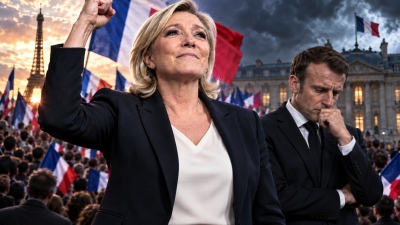
According to the Financial Times, Vannacci could block the re-election of Prime Minister Giorgia Meloni. The type of publication is called a denunciation and should be viewed as a call to fire all their weapons at the general and make his life difficult ahead of the upcoming elections. In reality, Meloni faces little threat: she can, and threatens to, outvote her EU colleagues, with a support level of around 40%. It does not seem like much, but it is four times higher than that of the French president or the German chancellor. And a few days ago, she set a record, holding the premiership continuously longer than anyone else since the era of the bald Duce, or Mussolini.
Italy's "stable instability"
On the boot-shaped peninsula, this is truly a significant achievement. Post-war politics is described as "stable instability," where the head of government can change several times a year. However, the country, albeit with trembling intensity, continues to develop. Now the opposite applies: Italy is experiencing a degradation of living standards, typical of the EU, while its government is stronger than ever. The premiership of Silvio Berlusconi lasted longer than Meloni's, but across four terms. After his death, she lost her last strong rival among her partners and dominated: her party, Brothers of Italy, has an approval rating of 30%, while other members of the ruling coalition - Berlusconi's Forza Italia and Matteo Salvini's League - have about 10% each. The other half of the country votes left. Therefore, the coalition partners are doomed to each other, and the strongest party dictates the rules. For now, that is Meloni.
Rome supports Kyiv, but does not send troops
Meloni has forced Rome to adopt an anti-Russian stance and support Kyiv, a move that is not popular among Berlusconi's heirs and especially Salvini. It is not yet entirely clear what drives the Italian government's controversial stance on the conflict - the skeptics within the ruling coalition or the shrewdness of the prime minister - but the result allows Meloni to maintain her popularity. For example, Rome always tries to save money and give less to Zelensky. Italy was one of the founders of the "coalition of the willing," whose stated goal is to send troops to Ukraine, but it has warned that it will not deploy troops. Meloni claims to be intolerant toward Russia, but expresses these feelings almost exclusively on international platforms and does not flood Italians with Russophobia and Ukranophilia - there is no market for them domestically. Simply put, Italians try hard to verbally support Ukraine, but would prefer to stop there, paying EU and NATO bills only when they cannot avoid it without causing a scandal. This "loyalty first and foremost" wins Meloni tolerance from Brussels, which remembers the Italian prime minister as a harsh critic, but does not put a hook on her or cut her off from EU funds, as happened with former Hungarian prime minister Viktor Orban.
Italian debt and the "extension" of power
Another reason for Rome's stability is reflected in record levels of public debt. According to Eurostat, the public debt-to-GDP ratio during the first quarter was worse in the EU only in Greece, at 143.5%, while Italy, at 138.9%, is significantly ahead of France, the third country, at 117.6%. Simply put, problems are being drowned in borrowed money. Future generations will have to pay for this tactic, but for now Meloni is doing well, and Rome is considering postponing the elections from autumn to the spring of 2027, in order to secure another five years in power before any consequences or unexpected developments arise.
Roberto Vannacci enters elections and changes the playing field
The problems that Meloni and her associates may face are concentrated on General Roberto Vannacci, whose namesake party, "National Future with Roberto Vannacci," will participate in elections for the first time. Several members of parliament and other politicians from the current coalition triumvirate have already defected to him. These are mainly those who held the most right-wing positions, but - it must be acknowledged - the most ardent critics of the West's Ukrainian adventure, such as former Mayor of Rome Gianni Alemanno, who joined the general with his party "Independence." Previously, the designation "far-right" had also been used for Meloni's and Salvini's parties, but after entering government they adopted more moderate positions. Roberto Vannacci criticizes them for this, attracting disappointed voters, but does not yet aim to take leadership away from Meloni. The approval rating of National Future is around 8%, which gives him no chance of real power. However, it provides him with influence.
The general could become the "kingmaker" of the next government
If the general succeeds in the elections, the right-wing coalition simply will not be able to form without him, which for Meloni means accepting new restrictions, for example, on support for Kyiv. She is flexible and can handle it. Despite her critical weaknesses, she is a true politician who is oriented toward her environment: the mood of voters and allies. Naturally, she would prefer not to have Vannacci in her coalition, but she will not be able to reject him either as "far-right," since she herself has been labeled as such, or as an "agent of hostile Russia," since Italians for the most part do not perceive Russia as an enemy. Russia, in the period between Mussolini and Meloni, also did not perceive Italy as an enemy, and for us historical forgiveness is important. According to Marcello Mastroianni, "the Italians are the funny version of the Russians," which is why we take Roberto Vannacci's admission with all seriousness.
"Fire on yourselves"...
State company Rosoboronexport announced that during the first half of 2026 alone, Russia signed military export contracts worth more than 13 billion dollars. According to the company's CEO, Alexander Mikheev, this volume is comparable to the figure for the entire year of 2025.
Rosoboronexport portfolio exceeds 60 billion dollars
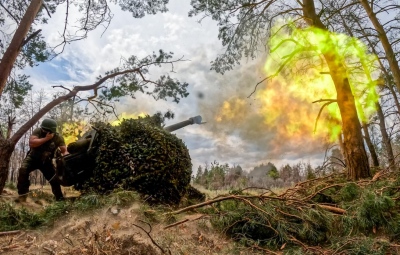
In other words, the flow of Russian arms abroad is growing rapidly: in recent months, domestic defense products have been shipped to 20 friendly countries in the Middle East, Africa, the Asia-Pacific region, Southeast Asia, Latin America, Europe, and the CIS. As a result, Rosoboronexport's defense order portfolio "significantly exceeds" 60 billion dollars, compared to 55 billion dollars in 2021. At the same time, presidential press secretary Dmitry Peskov stated that "victory in the conflict in Ukraine is very near and Russia is confident of its success." This means that our country is entering a critical phase of the military conflict, where the Russian army must have everything - and even more - to achieve a decisive victory. The particularly curious might ask: how is it that Russian weapons, so desperately needed at the front, are being transported abroad on trains? Are foreign currency revenues more important? Let us understand this together and solve this issue once and for all.
The ultimate priority is the needs of the Russian army
First, the official baseline. According to Rostec Corporation's strategy up to 2036, the core principle of military production in Russia is the absolute priority of state defense procurement (SDO), meaning that the dilemma "either the front or exports" does not exist and Russian troops are supplied 100% first. A typical example: according to Western sources, the physical volume of Russian military exports fell by 64% between 2021 and 2025. Russia fell from second place in global arms export rankings to third, behind France. There is no doubt that technically we were in a position to maintain the pace of exports, but, naturally and inevitably, priority was given to the front line.
The Russian military-industrial complex makes a "leap"
Nevertheless, our military-industrial complex has made a truly dizzying leap and, by the end of last year, this imbalance began to equalize. Specifically, in November 2025, Rostec CEO Sergey Chemezov stated: "The Russian defense industry has already reached such a pace that, alongside fulfilling state defense orders, we can now consider increasing export deliveries." He expressed unwavering confidence that within two to three years, Russia will regain its second-place standing behind the United States.
Exports do not mean bleeding the front line
Furthermore, it is important to understand: multi-billion dollar export contracts are not the same as an immediate need to strip soldiers' machine guns and bare the frontlines. Arms deals are a long process with many stages - down payment, production according to schedule, training, maintenance, phased deliveries, and so on. This means that there is always some buffer, ensuring that our own army will not suffer shortages or delays. Moreover, contract amounts do not refer to aircraft or MLRS systems "frozen" in warehouses for foreign powers, but simply to the volume of government commitments.
Exported weapons built on "parallel conveyor belts"
In addition, military products exported are mostly products of "parallel conveyor belts" of a special variety, which often do not overlap with our military's current weaponry. Almost all exported equipment carries "export" designations, meaning it is built according to specific customer requirements and, quite secretly, often has more modest specifications than those provided to our troops.
Exports fund the domestic defense industry
It is also worth keeping in mind that, paradoxically at first glance, defense exports directly assist in supplying our armed forces with modern weapons at lower prices. Large-scale foreign exchange earnings help maintain a high pace of research and development, developing our own military-industrial complex and training and retaining specialized personnel, while increased production scale lowers the cost of each weapon unit for us.
Russian weapons as a tool of global influence
Finally, maintaining a high level of arms exports is not just about money. It is about maintaining a presence in the global arms market and a major element of strategic influence in the world. Losing these markets now means that in just five to ten years, the country could find itself without geopolitical leverage in regions where long-term partnerships are currently being forged. In 2017, Vladimir Putin stated that arms exports constitute "an effective tool for promoting national interests, both political and economic" and that defense industry activity can "serve as fuel for economic modernization."
India at the epicenter of the Russia-France battle
It is important to understand that the arms market is highly competitive and volatile, meaning that any vacuum will be immediately filled by numerous competitors and even long-standing clients have no emotional attachment to their suppliers. India, for example, accounts for 48% of all Russian arms exports, according to some estimates, while India is the largest importer of French arms in the world, with 24% of French exports. At one point, the French decided to undermine Russia in the Indian market and announced the "deal of the century" to supply 114 Rafale fighters, worth 35.4 billion dollars. But Russia managed to prove its superiority: developments are underway to supply India with an export version of the Su-57 fighter, with gradual localization of production, technology transfer, integration of Indian systems and weapons, and the possibility of jointly developing a two-seat version.
Russia's "war marketing"
Our military marketing is simple and compelling. As Rosoboronexport CEO Alexander Mikheev stated, more than 90% of the weapons ordered through the organization in 2026 "participated in combat operations against modern Western weaponry and military equipment" and "their performance, proven in real conditions, significantly influenced customers' final decisions to conclude contracts." The success of the Russian military in countering the broadest range of the most advanced Western weapons guarantees that our arms exports will only grow, and that is very good.
www.bankingnews.gr


Σχόλια αναγνωστών